
4 min read · Ralph Simeone, All In Roofing
9 Signs You Need a New Roof: A New Jersey Homeowner's Checklist
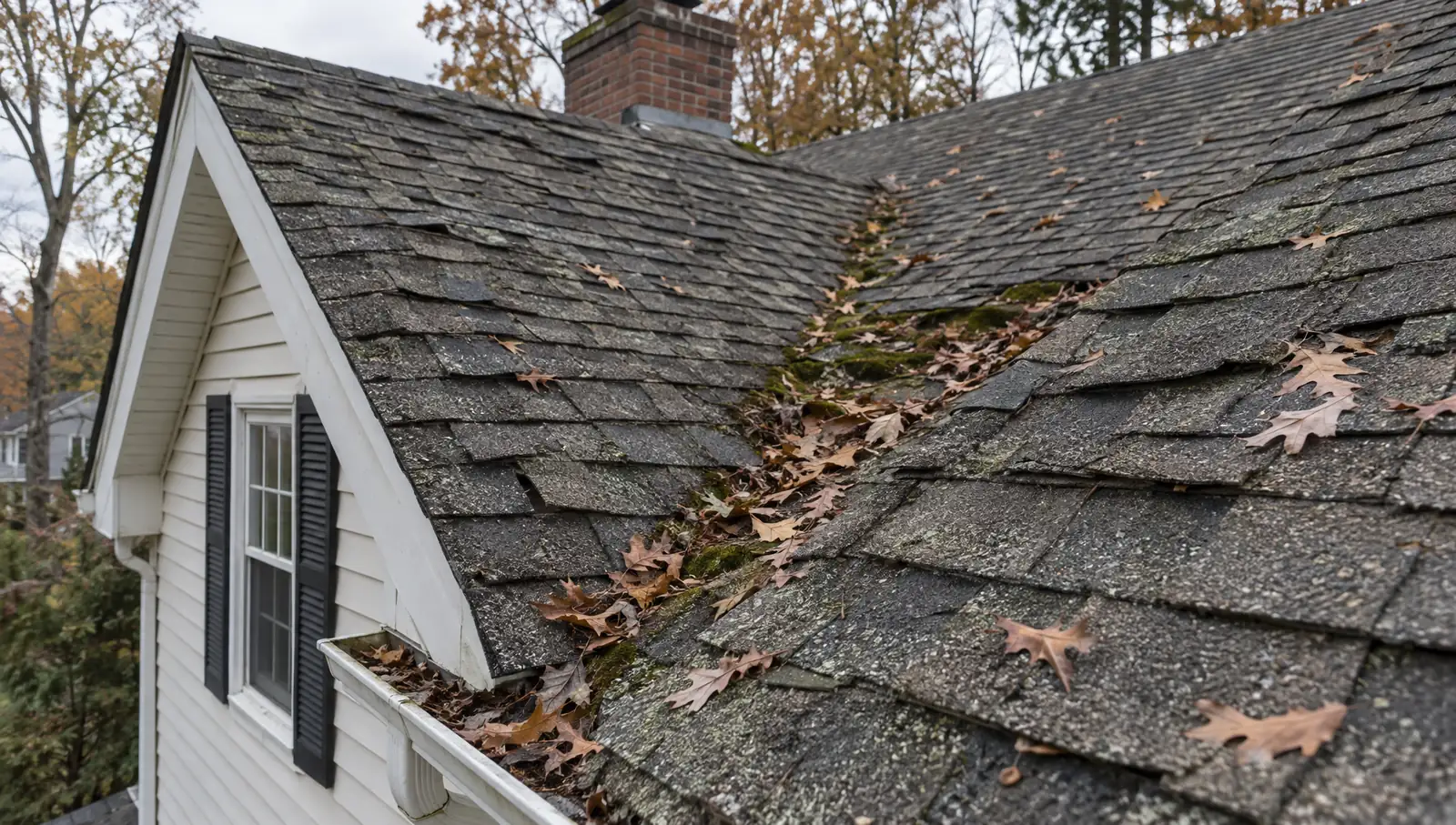
Most roofs don't fail overnight. They send signals for years first. Here's how to read them, from the curb, the gutters and the attic.
A roof rarely fails all at once. In most cases it spends years sending signals: a few curled shingles, a stain on the ceiling that comes and goes, gutters that collect more grit than they used to. Catching those signals early is the difference between a planned replacement on your schedule and an emergency call in the middle of a nor'easter.
This checklist walks through the signs worth paying attention to, where to look for them, and what they usually mean. You can do most of it from the ground with a pair of binoculars and a flashlight.
Start from the curb
Stand across the street and look at the whole roof plane in good daylight. A healthy asphalt shingle roof looks flat, even and uniform in color. Here's what to look for instead.
1. Curling, cupping or buckling shingles
Shingles are designed to lie flat. When the edges turn up (cupping) or the middles bow (clawing), the shingle has usually lost flexibility from age, heat or poor attic ventilation. Curled shingles are easier for wind to catch and lift, which is why they often go first in a strong storm.
2. Missing or cracked shingles
One or two missing shingles after a windy night is a repair. Shingles going missing every season, or cracks spread across several slopes, suggests the whole roof is getting brittle and the sealant strips that hold each course down are no longer doing their job.
3. A sagging roofline
The ridge should be straight and the planes should be flat. A dip, wave or sag can point to moisture damage in the roof deck or a structural issue underneath. This one deserves a professional look soon, not next year.
4. Dark streaks, moss or patchy color
Dark streaks are often algae, which is common on north-facing and shaded slopes in our humid summers. On their own they're mostly cosmetic. Moss is different: it holds moisture against the shingles and can push them up. Patchy, uneven color can also mean granule loss, which brings us to the gutters.
Check the gutters and downspouts
5. Granules collecting in the gutters
Those sandy, colored granules on your shingles protect the asphalt underneath from the sun. A small amount washing off is normal, especially on a newer roof. But if your gutters or downspout splash areas are collecting noticeable piles of grit year after year, the shingles are wearing thin and the asphalt is more exposed to UV.
Go into the attic
The attic tells you what the outside can't. Go up on a sunny day, then again after a heavy rain if you can.
6. Daylight through the roof boards
Turn off the attic light. If you can see pinpoints of sunlight coming through the roof deck (other than at intended vents), water can get in the same way.
7. Water stains, damp insulation or a musty smell
Look at the underside of the roof sheathing, the rafters and around chimneys, vent pipes and skylights. Dark rings, soft spots, wet insulation or mold are signs that water is already getting past the roof. Small, localized leaks are often repairable. Widespread staining usually isn't.
8. Ceiling stains and peeling paint inside
Brown rings on upstairs ceilings, bubbling paint near the tops of walls and stains around light fixtures all deserve a look. Don't assume a dry stain means the problem is gone. Leaks often show up only in wind-driven rain from a particular direction.
Consider the roof's age and history
9. The roof is getting older and the issues are adding up
Age alone doesn't mean a roof has to come off. What matters is age combined with condition. An older roof with one minor leak can often be repaired. An older roof with curling, granule loss and leaks in more than one spot is usually telling you that repairs will keep coming. If you bought your home without records, a roofer can usually estimate the roof's condition from an inspection.
Quick NJ homeowner checklist
- Shingles lying flat, with no curling, cupping or cracks
- No missing shingles or exposed underlayment
- Ridge line straight, no sagging
- Gutters free of heavy granule buildup
- Flashing around chimneys, vents and walls intact and sealed
- No daylight or water stains in the attic
- No ceiling stains or peeling paint upstairs
- No ice dams forming along the eaves in winter
If you checked off everything, great: keep an eye on it each spring and fall. If two or three items gave you pause, it's worth getting a professional opinion before the next big storm.
A note on safety
Please do your inspection from the ground, a ladder at the gutter line, or inside the attic. Walking on a roof, especially a steep or wet one, is genuinely dangerous, and it can also damage older shingles. Let a pro handle anything on the roof itself.
Get a straight answer
Not every warning sign means you need a new roof, and a good contractor will tell you when a repair makes more sense. At All In Roofing, we inspect, photograph what we find and walk you through your options, whether that's a targeted repair or a full replacement with GAF shingles. Request a free estimate or call or text us at 732-584-0700.