
4 min read · Ralph Simeone, All In Roofing
After a Storm: What to Do About Roof Damage and Insurance Claims in New Jersey
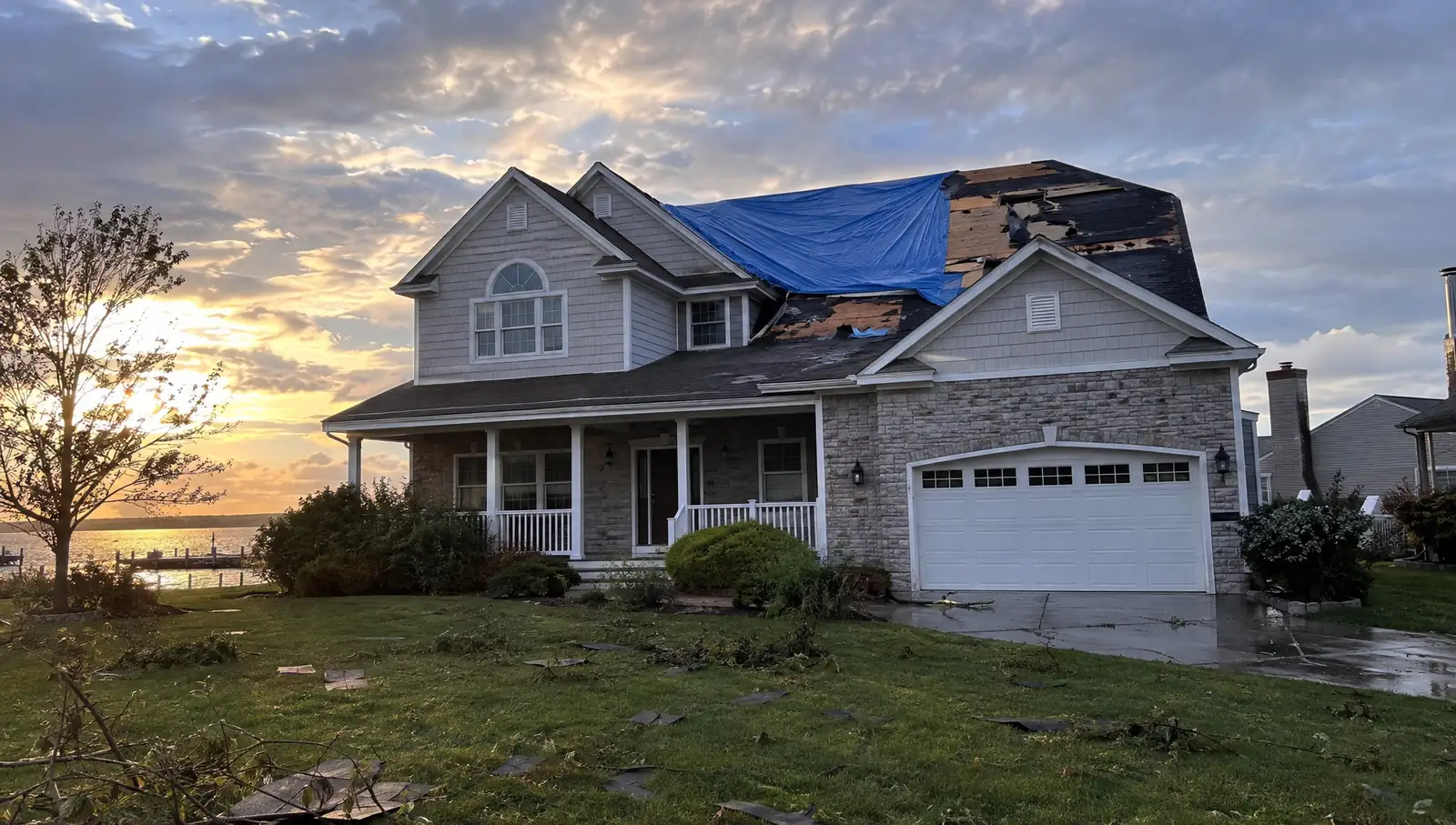
High winds, a nor'easter or a fallen tree can leave you with a damaged roof and a lot of questions. Here's what to do first, and in what order.
Living in New Jersey means living with weather. Nor'easters, summer thunderstorms, the remnants of tropical systems and the occasional damaging wind event all pass through, and shore towns feel the wind first. When a storm damages your roof, it's stressful, and it's easy to make decisions in the wrong order.
This guide covers the practical steps to take after storm damage, from keeping your family safe to working with your insurance company. It's general guidance, not legal or insurance advice; every policy is different, so always read your own policy and talk to your insurer.
Step 1: Stay safe first
Before you think about shingles, think about hazards.
- Stay away from downed power lines and report them to your utility.
- If a tree or large limb is on your roof, keep everyone out of the rooms underneath.
- If water is coming through a ceiling near light fixtures or outlets, shut off power to that area if you can do so safely.
- Do not climb onto a wet, damaged roof. Wind-damaged roofs can hide weak spots, and falls are a real danger.
Step 2: Document everything
Good documentation makes the rest of the process smoother. As soon as it's safe:
- Take photos and video of the damage from the ground: missing shingles, debris, damaged gutters, fallen limbs.
- Photograph the inside too: ceiling stains, water on floors, wet insulation in the attic, damaged belongings.
- Note the date and time of the storm and when you first noticed the damage.
- Keep any shingles or pieces of debris that came off the roof.
- Save receipts for anything you spend on emergency protection, cleanup or temporary housing.
Timestamped photos taken before any temporary repairs are especially helpful.
Step 3: Prevent further damage
Most homeowner's policies expect you to take reasonable steps to protect your home from additional damage after a loss. In practical terms, that usually means stopping water from getting in.
- Place buckets and towels under active leaks and move valuables out of the way.
- Have a professional install a temporary tarp or emergency patch on the roof.
- Keep the damaged materials and receipts for the temporary work.
Check your policy or ask your insurer how they want emergency repairs handled. Permanent repairs generally shouldn't happen until the damage has been documented and, if you're filing a claim, your insurer has had a chance to see it.
Step 4: Contact your insurance company
Call your insurer or agent, or use their app or website, to report the damage. Policies typically have requirements about prompt notice, so don't wait. When you call, ask:
- Is this type of damage covered under my policy?
- What is my deductible? Some policies have a separate deductible for wind or named storms.
- Will an adjuster inspect the roof, and when?
- Do you want photos, estimates or other documents from me?
- Are there any deadlines I need to know about?
Write down your claim number, the name of everyone you speak with and the date of each conversation.
Step 5: Get a professional roof inspection
Some storm damage is obvious. Some is not: lifted shingles that have lost their seal, cracked shingles, damaged flashing or punctures that won't leak until the next heavy rain. A roofer can inspect the roof up close, photograph what they find and give you a written estimate for repairs.
It often helps to have your roofer's documentation in hand when the adjuster visits, and some homeowners ask their roofer to be present for the inspection so both are looking at the same damage. Ask your insurer how they prefer to handle this.
Step 6: Review the adjuster's findings
After the inspection, your insurer will tell you what they'll cover. Read it carefully. If something seems missing, such as damage your roofer documented that isn't in the insurer's estimate, ask questions. Insurers generally have a process for reviewing additional documentation. If you have serious concerns about how your claim is handled, the New Jersey Department of Banking and Insurance is the state regulator for insurance companies, and a licensed public adjuster or attorney can advise on your specific situation.
Watch out for storm chasers
After big storms, out-of-town crews sometimes go door to door. Some are legitimate; some are not. Before you hire anyone:
- Confirm they are registered as a home improvement contractor in New Jersey and fully insured.
- Look for a real local address and phone number.
- Get the scope of work and price in writing.
- Be wary of anyone pressuring you to sign on the spot or asking for large payments upfront.
We're here when the storm passes
All In Roofing is a family-owned, fully insured roofer based in Jackson, NJ, NJ license #13VH13268100, with 24/7 emergency service across Ocean, Monmouth and Middlesex counties. We can tarp your roof, document the damage with photos and give you a clear written estimate. Call or text 732-584-0700, or request a free estimate online.