2 min read · Ralph Simeone, All In Roofing
Siding Options for New Jersey Homes
Vinyl is the most common and lowest-maintenance siding for New Jersey homes, fiber cement is heavier, noncombustible and paint-finished, engineered wood gives a wood look with less upkeep than cedar, and real cedar offers the classic shore look at the cost of more maintenance. Replacing existing siding on a one- or two-family home is ordinary maintenance in NJ, except polypropylene siding.
Vinyl
The default on many NJ homes, from Ocean County ranches to Middlesex colonials. It never needs paint, cleans with a hose and soft brush, and comes in clapboard, dutch lap, board-and-batten and shake profiles. InterNACHI's chart lists vinyl siding at about 60 years.
- Good for: low maintenance and a wide range of colors and profiles
- Watch for: thin panels that wave on long walls, and damage from grills or heat reflected off nearby windows
- Tip: insulated vinyl, with foam backing, feels more solid and lies flatter
Fiber cement
A cement-and-fiber board, best known through James Hardie, which says its fiber cement products are noncombustible and resist moisture, pests and severe weather. It holds crisp lines and paint well.
- Good for: a premium painted look, fire resistance and durability
- Watch for: it's heavy and needs experienced installers; painted finishes will eventually need repainting
Engineered wood
Wood strands bonded with resins and treated, sold pre-primed or pre-finished. It looks like real wood, comes in long lengths and costs less to maintain than natural cedar.
- Good for: a warm wood look, especially lap and board-and-batten
- Watch for: edges and cuts must be sealed and kept clear of the ground
Cedar shingles and shakes
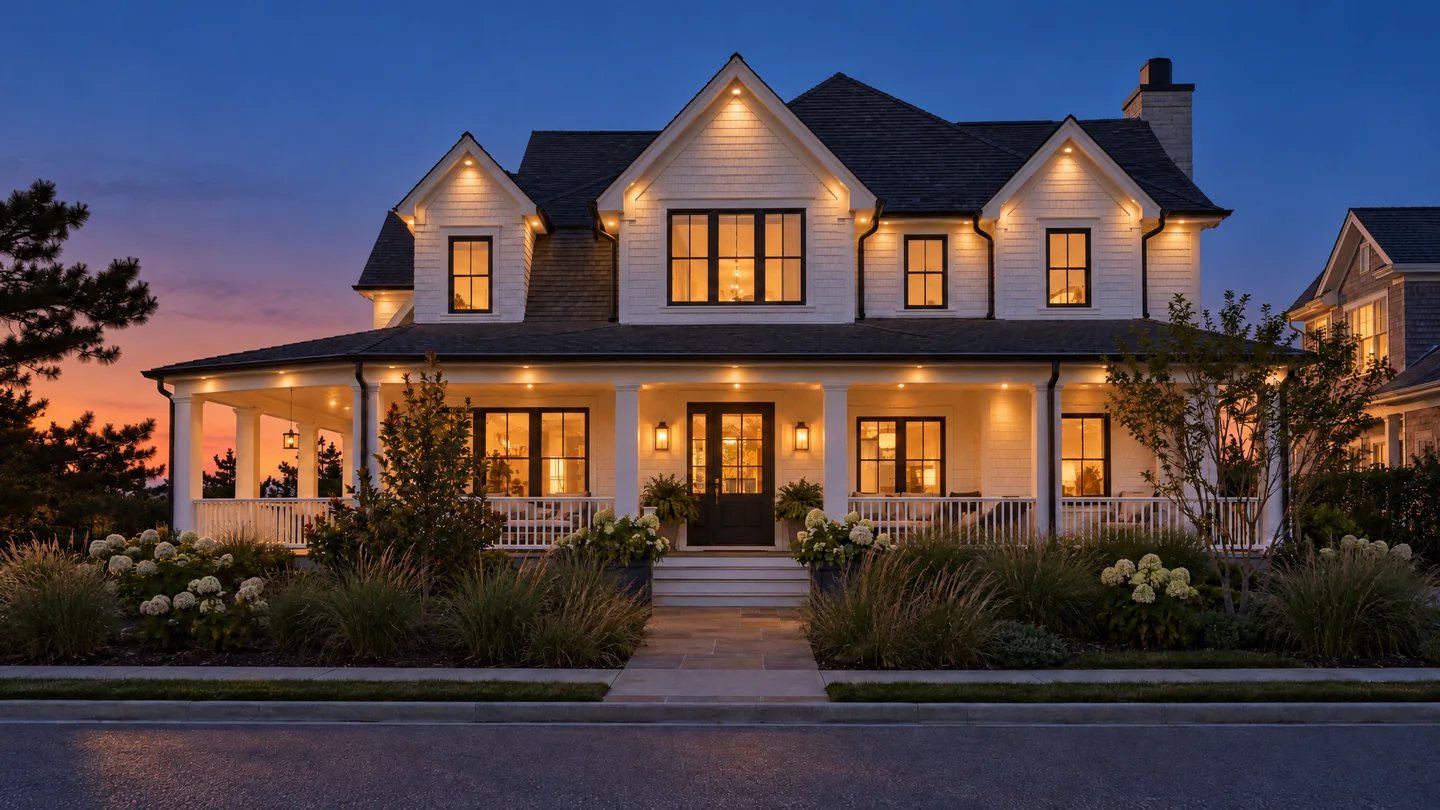
The classic Jersey Shore look. Beautiful, but cedar needs staining or sealing, and it weathers fastest where salt air, sun and moisture hit it hardest.
Polypropylene shakes
Molded panels that mimic cedar shakes without the upkeep, often used on gables and accent walls. Note that New Jersey's construction code makes an exception for polypropylene siding: unlike other siding on one- and two-family homes, replacing it is not ordinary maintenance, so check with your town about a permit.
Choosing for a New Jersey house
- Near the shore: prioritize wind performance and fasteners rated for salt air.
- Under heavy trees: pick materials and colors that hide mildew and clean up easily.
- Mix materials: lap siding on the body with shakes or board-and-batten in the gables is an easy way to add character.
- Do it with the roof: siding, soffit, fascia, trim and gutters all meet at the roof edge, so planning them together gives cleaner details.
Permits
Under N.J.A.C. 5:23-2.7, repairing or replacing existing siding on one- and two-family dwellings is ordinary maintenance, with no permit, inspection or notice required, except for polypropylene siding. HOA rules may still apply.
You can try siding colors and styles on a house in All In Roofing's Design Studio, then get a free estimate by calling or texting 732-584-0700.