4 min read · Ralph Simeone, All In Roofing
Roof Repair vs. Replacement: How to Decide (Without Guessing)
A leak doesn't automatically mean a new roof, and a new roof isn't always the upsell it sounds like. Here's a clear way to weigh the decision.
When a roof starts leaking or a storm pulls off a few shingles, the first question most homeowners ask is simple: can this be fixed, or does the whole thing need to go? The honest answer depends on a handful of factors, and once you understand them, the decision usually becomes clear.
Here's how we think about it, and how you can too.
When a repair usually makes sense
A repair is the right call when the problem is limited and the rest of the roof still has plenty of life in it. Common examples:
- A few shingles blown off or damaged in a wind storm
- A leak traced to one spot, such as a cracked pipe boot, loose flashing at a chimney, or a failed seal around a skylight
- Minor damage from a fallen limb that didn't reach the roof deck
- Worn sealant or flashing at a wall or dormer
Many leaks come from the details, not the field of shingles. Flashing, vent boots and the joints where the roof meets a wall are the usual suspects, and fixing them properly can buy years of reliable performance.
When replacement usually makes more sense
Replacement starts to win when problems are widespread, recurring or hiding something bigger.
- Damage across multiple slopes. If curling, cracking or granule loss shows up all over the roof, patching one area just moves the next leak somewhere else.
- Repeated leaks. Calling for a repair every season is a sign the system as a whole is wearing out.
- Soft or rotted decking. If water has reached the plywood underneath in more than one place, the fix goes deeper than shingles.
- The roof is near the end of its expected life. Spending real money on an aging roof can be throwing good money after bad.
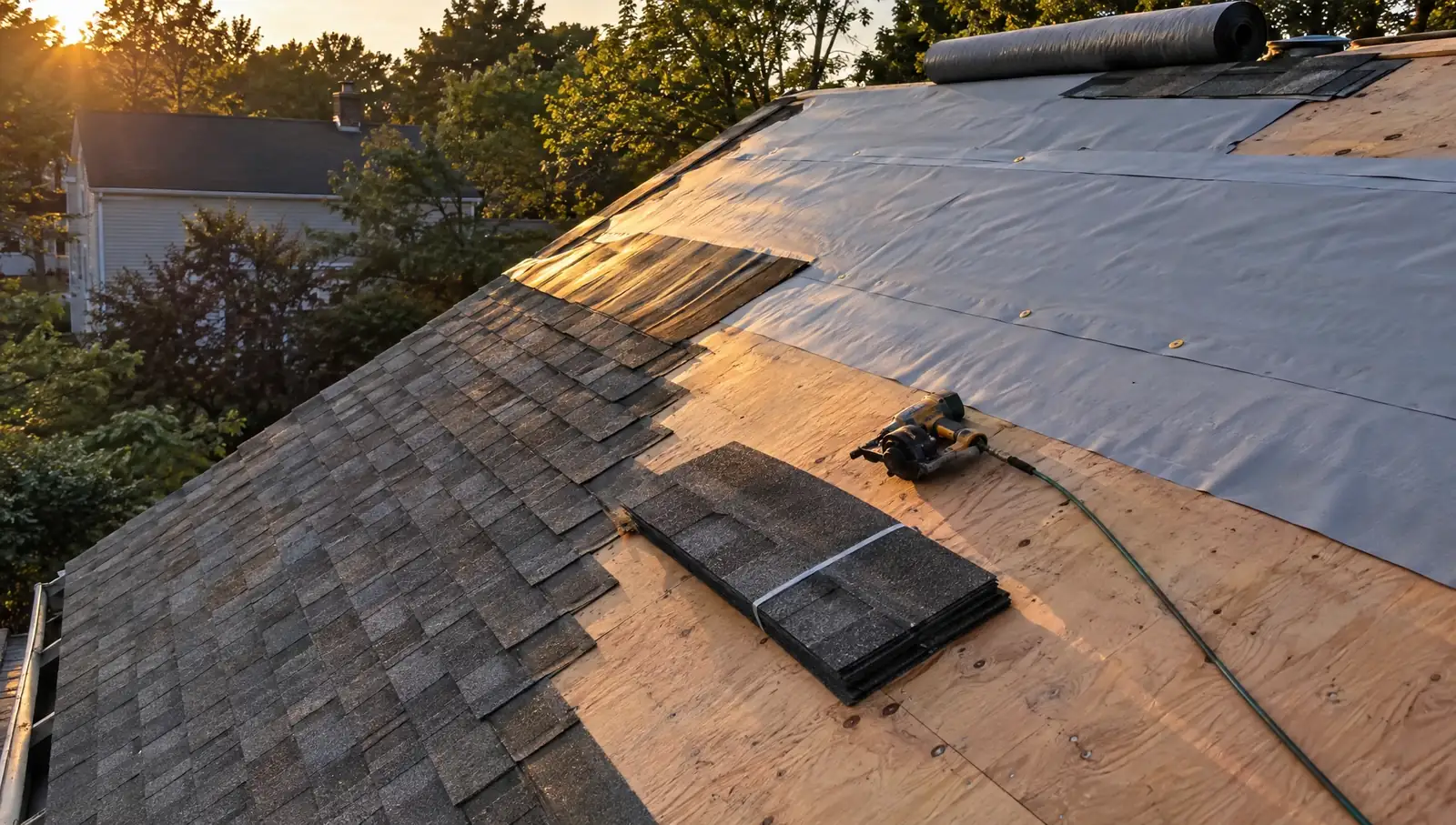
- Multiple layers already. Some homes have a second layer of shingles installed over the first. Adding more isn't a good idea, and local building codes limit how many layers are allowed. A tear-off lets the roofer inspect and repair the deck.
The questions that settle it
How old is the roof?
A younger roof with storm damage is almost always a repair candidate. An older roof with the same damage is a closer call, because the new shingles may not blend well with weathered ones and the rest of the roof may not be far behind.
How much of the roof is affected?
A small, localized problem points toward repair. When the damaged or worn area becomes a large share of the roof, the cost of repairs gets closer to the cost of doing it right once, and replacement often becomes the better value.
What does the attic show?
Staining in one spot suggests one leak. Staining across the attic, damp insulation, or mold suggests a system that's letting water in more broadly, or a ventilation problem that's shortening the life of the roof from underneath.
Can new shingles match?
Shingle colors and product lines change over the years, and even the same color weathers differently over time. A patch that doesn't match can be noticeable from the street, which matters if curb appeal or resale is on your mind.
How long will you stay in the home?
If you're selling soon, a solid repair may be enough, though buyers and inspectors do look closely at roofs. If you're planning to stay for many years, replacing an aging roof now means you won't be doing it later on a less convenient timeline.
Is insurance involved?
If the damage came from a storm, your homeowner's policy may cover some or all of the work, depending on your coverage and the cause of the damage. Document everything and talk to your insurer before you decide. Our post on storm damage covers that process in more detail.
What about partial replacement?
Sometimes one slope is badly worn (often the side that gets the most sun) while the others are in better shape. Replacing a single slope can be a reasonable middle ground. Just know that the old and new sections will likely look different, and the older sections will still age out on their own schedule.
Beware of both extremes
Be cautious of anyone who insists on a full replacement without showing you why, and equally cautious of quick patches that ignore an obvious bigger problem. A good inspection should come with photos, a clear explanation of what's wrong, and options. You should understand the reasoning, not just the price.
Repairs can be done right, too
A quality repair uses matching materials where possible, replaces damaged underlayment and flashing rather than just covering them, and seals everything properly. Caulk on top of a problem is not a repair.
Let us take a look
All In Roofing handles both, from single-shingle repairs and flashing fixes to complete tear-offs with GAF shingles, and we'll tell you plainly which one your roof needs. We also offer 24/7 emergency service if water is coming in right now. Book a free estimate and we'll inspect, photograph and walk you through your options.